Sunday, 16 September 2012


Friday, 6 May 2011
Royal Wedding Postcript: Three Things Britons Cannot Possibly be Proud of on That Day
The Royal wedding in Britain on April 29th was a delightful event. In tradition, pomp and pageantry, no one could beat it. Everyone involved played their part to perfection, and it was a spectacle well worth seeing. It reminded Britons - white Britons in particular - of their heritage, their presence, their visibility and their power. However, when the dust has settled, there were certainly three things that did not do us proudly on the day and, if no one else is going to mention how bad they were, I will.
1. The Omission of Tony Blair and Gordon Brown
First was the denial of an invitation to the former Prime Ministers, Gordon Brown and Tony Blair. That was simply shameful. Whatever reason for not sending them an invitation, it underlines just how out of touch the Royal Family is - or their advisers - with their own people and the times we live in. Tony Blair and Gordon Brown might not have been Knights of the Garter, which was the official reason given, or exemplary leaders, but they are key members of Britain's past, who have helped to shape the country into what it is.
 (Tony Blair-right)
 (Gordon Brown-below)
On occasions like this, just as in America with past presidents, every single Prime Minister should be automatically invited as a matter of protocol. They are part of our history, they led this country in their own unique styles, they have brought us to this position and should be treated as elder statesmen, especially on state occasions. We cannot wish them away as if they did not exist, especially after their high profile roles. This was a slap in the face for the country's Labour Party, while giving the Conservatives more than enough representation. There is something really unfair, meanspirited and sad about that deliberate omission, which really does not endear the Royal Family to the public on occasions like this. Regardless of the reasons, how will countless Labour supporters feel about the public snub of their former leaders? The chief role of the monarchy is to unite, not to divide. That petty action was divisive on such an important day.
2. The Awful Practice of Including Royal Children while leaving out their Divorced Parents
Sarah Ferguson was not at the wedding, surprise, surprise, while her children, Beatrice and Eugenie, and her former husband, the Duke of York, were well in attendance. Viscount Linley and his sister, Sarah Chatto (Princess Margaret's children) were also there, but no sign of their father, Lord Snowdon, who was quite bitter about it, in fact. Mark Phillips (ex of Princess Anne) was nowhere to be seen either. What message is being given to their children by that meanspirited and stupid policy. Here is a family that goes to lengths to be united and together in everything they do, to stress the importance of keeping the Firm or Family together, yet are so insensitive they can easily deny children of divorced parties the presence of their parents on such special moments when it matters to them. What kind of family treats children in such ways by making their parents pariahs, by emphasising the importance of one parent against another when both parents brought the children into the world?

If one parent is going to be there on such important public occasions, BOTH parents should be there, even if they are seated separately. Being divorced does not make them suddenly invisible; it does not make them any less than they were and it doesn't turn them into subhuman beings. Once again, the function of the Royal Family is not to be divisive but affirming and uniting. Life never goes completely to plan and, while no one wants a divorce, least of all in such a public institution, to then separate the sons and daughters of divorcees from their parents in such a public way is dehumanising, lacking in sensitivity and carries no kind of love within it at all. Just like the lack of invitation to the former premiers, this particular policy makes the Royals appear to be unfeeling robots who are governed by protocol and very little else.
3. The Duchess of Cornwall's Dress

I could not believe my ears when one of the fashionistas on the BBC cooed about Camilla's dress, saying how wonderful and gorgeous it was. Which dress was she looking at, exactly? Certainly not the one that I could see in front of me. The dress was just bloody awful, frumpish and OLD fashioned. The woman looked like someone's great grandmother than a royal princess. The ensemble was ill fitting, the colours boring, the style unattractive and the whole effect quite off-putting. Like the emperor's non-existent clothes, everyone thought they had to praise it in the greatest hyperboles, yet there was nothing really attractive there, nothing to please the eye or warm the heart. It was just plain ghastly.
Does one having a title tends to blind others to the truth? Back to the drawing board, Duchess!
1. The Omission of Tony Blair and Gordon Brown
First was the denial of an invitation to the former Prime Ministers, Gordon Brown and Tony Blair. That was simply shameful. Whatever reason for not sending them an invitation, it underlines just how out of touch the Royal Family is - or their advisers - with their own people and the times we live in. Tony Blair and Gordon Brown might not have been Knights of the Garter, which was the official reason given, or exemplary leaders, but they are key members of Britain's past, who have helped to shape the country into what it is.
 (Tony Blair-right)
 (Gordon Brown-below)
On occasions like this, just as in America with past presidents, every single Prime Minister should be automatically invited as a matter of protocol. They are part of our history, they led this country in their own unique styles, they have brought us to this position and should be treated as elder statesmen, especially on state occasions. We cannot wish them away as if they did not exist, especially after their high profile roles. This was a slap in the face for the country's Labour Party, while giving the Conservatives more than enough representation. There is something really unfair, meanspirited and sad about that deliberate omission, which really does not endear the Royal Family to the public on occasions like this. Regardless of the reasons, how will countless Labour supporters feel about the public snub of their former leaders? The chief role of the monarchy is to unite, not to divide. That petty action was divisive on such an important day.
2. The Awful Practice of Including Royal Children while leaving out their Divorced Parents
Sarah Ferguson was not at the wedding, surprise, surprise, while her children, Beatrice and Eugenie, and her former husband, the Duke of York, were well in attendance. Viscount Linley and his sister, Sarah Chatto (Princess Margaret's children) were also there, but no sign of their father, Lord Snowdon, who was quite bitter about it, in fact. Mark Phillips (ex of Princess Anne) was nowhere to be seen either. What message is being given to their children by that meanspirited and stupid policy. Here is a family that goes to lengths to be united and together in everything they do, to stress the importance of keeping the Firm or Family together, yet are so insensitive they can easily deny children of divorced parties the presence of their parents on such special moments when it matters to them. What kind of family treats children in such ways by making their parents pariahs, by emphasising the importance of one parent against another when both parents brought the children into the world?

If one parent is going to be there on such important public occasions, BOTH parents should be there, even if they are seated separately. Being divorced does not make them suddenly invisible; it does not make them any less than they were and it doesn't turn them into subhuman beings. Once again, the function of the Royal Family is not to be divisive but affirming and uniting. Life never goes completely to plan and, while no one wants a divorce, least of all in such a public institution, to then separate the sons and daughters of divorcees from their parents in such a public way is dehumanising, lacking in sensitivity and carries no kind of love within it at all. Just like the lack of invitation to the former premiers, this particular policy makes the Royals appear to be unfeeling robots who are governed by protocol and very little else.
3. The Duchess of Cornwall's Dress

I could not believe my ears when one of the fashionistas on the BBC cooed about Camilla's dress, saying how wonderful and gorgeous it was. Which dress was she looking at, exactly? Certainly not the one that I could see in front of me. The dress was just bloody awful, frumpish and OLD fashioned. The woman looked like someone's great grandmother than a royal princess. The ensemble was ill fitting, the colours boring, the style unattractive and the whole effect quite off-putting. Like the emperor's non-existent clothes, everyone thought they had to praise it in the greatest hyperboles, yet there was nothing really attractive there, nothing to please the eye or warm the heart. It was just plain ghastly.
Does one having a title tends to blind others to the truth? Back to the drawing board, Duchess!
Thursday, 28 April 2011
Countdown to the Royal Wedding - Day 1: Five reasons why Kate Middleton will be a great Princess
In the past it has been difficult to gauge the potential of new members of the Royal Family because they all had to bow to protocol, they were taken from the same class of people (aristocrats and nobility), they behaved in the same manner beforehand, they appeared to have bland personalities that fitted in, and they toed the Royal line meticulously after that, almost like clones.
Kate Middleton appears an entirely different breed. She seems really refreshing and a person in her own right. One cannot see her disappearing behind the Royal facade because she seems pretty confident in herself: her own person. In fact, there are five outstanding things about our Kate which makes her perfect for the new role of Princess that she is about to acquire.

1. Her Personality
She is definitely the People's Princess. She smiles continuously, being happy within herself, so it is not difficult to spot when she is unhappy. She suddenly becomes very serious, her lips purse tightly together and her eyes become bland and unfocused. She clearly likes people in the easy way she treats them and the unselfconsciousness she displays when she is among them. She is most approachable, which puts others at ease and she has a natural warmth that is endearing. She is seen by the media as bringing a "refreshing informality" to the Royal Family. Kate is clearly a winner with the public already.
2. Her Family
All along one gets the feeling that Kate is very close to her family. She spends a lot of time with them, and even William is sharing their house more often too. I would hazard a guess that she is surrounded by love, affection and calm. Her mother and father seem a bulwark against the outside world, despite their fragile look, protecting her every step of the way. One doesn't have to look far to see that both she and her sister, Phillipa, are most valued and are treated that way. This means she has the necessary emotional support to be a bulwark against the rigid, and often detached barriers and structures of the Royal Family, as well as the background to give the Family a softer look in the future.
 Kate Middleton's parents: Carol and Michael Middleton.
3. Her Courage
It is clear that Kate does not take any prisoners. She is very courageous in how she acts, especially her treatment of Prince William as an ordinary person. She's not overawed at all by his status, and is very keen to get on with things in her own way too. Nothing seems to phase her. In fact, she appears to be relishing the role of princess-to-be with great enthusiasm, yet without too many airs and graces. In fact, she seems so natural for the part, it's as if she was born to it!

4. Her Background
Kate Middleton's background is solidly middle-class, with a history which includes coal miners and all kinds of skilled craftsmen and women. Her links are with the ordinary people, not a single titled person among her ancestry, which makes her quite unique for a Royal Princess. That fact has endeared her to the public in a very poignant way. She is truly one of them, and they are extra proud of her achievement in crossing the great class divide.
5. Her Empathy and Awareness
Kate appears to have a great deal of empathy, both for Prince William and what he has gone through, and the people she comes in contact with. She is very aware of her environment and what is required of her and she appears to be embracing it with new vigour. Above all the qualities, her sense of awareness makes her very supportive of William and that will be hugely beneficial in the years to come when they assume more responsibilities as a senior Royal couple.

Kate is enjoying the moment that fate has carved for her, and the fact that she has been smiling through it all says a lot about her character, her confidence and her keen sense of awareness in who she is about to be and where she could take that role. She has the twin assets of seeming both ordinary and regal at the same time. She will certainly fit into the Royal Family, on one hand, but her own solid values, her extrovert personality and the love and support she has enjoyed, will ensure that she will be changing that Family as well.
Kate Middleton appears an entirely different breed. She seems really refreshing and a person in her own right. One cannot see her disappearing behind the Royal facade because she seems pretty confident in herself: her own person. In fact, there are five outstanding things about our Kate which makes her perfect for the new role of Princess that she is about to acquire.

1. Her Personality
She is definitely the People's Princess. She smiles continuously, being happy within herself, so it is not difficult to spot when she is unhappy. She suddenly becomes very serious, her lips purse tightly together and her eyes become bland and unfocused. She clearly likes people in the easy way she treats them and the unselfconsciousness she displays when she is among them. She is most approachable, which puts others at ease and she has a natural warmth that is endearing. She is seen by the media as bringing a "refreshing informality" to the Royal Family. Kate is clearly a winner with the public already.
2. Her Family
All along one gets the feeling that Kate is very close to her family. She spends a lot of time with them, and even William is sharing their house more often too. I would hazard a guess that she is surrounded by love, affection and calm. Her mother and father seem a bulwark against the outside world, despite their fragile look, protecting her every step of the way. One doesn't have to look far to see that both she and her sister, Phillipa, are most valued and are treated that way. This means she has the necessary emotional support to be a bulwark against the rigid, and often detached barriers and structures of the Royal Family, as well as the background to give the Family a softer look in the future.
 Kate Middleton's parents: Carol and Michael Middleton.
3. Her Courage
It is clear that Kate does not take any prisoners. She is very courageous in how she acts, especially her treatment of Prince William as an ordinary person. She's not overawed at all by his status, and is very keen to get on with things in her own way too. Nothing seems to phase her. In fact, she appears to be relishing the role of princess-to-be with great enthusiasm, yet without too many airs and graces. In fact, she seems so natural for the part, it's as if she was born to it!

4. Her Background
Kate Middleton's background is solidly middle-class, with a history which includes coal miners and all kinds of skilled craftsmen and women. Her links are with the ordinary people, not a single titled person among her ancestry, which makes her quite unique for a Royal Princess. That fact has endeared her to the public in a very poignant way. She is truly one of them, and they are extra proud of her achievement in crossing the great class divide.
5. Her Empathy and Awareness
Kate appears to have a great deal of empathy, both for Prince William and what he has gone through, and the people she comes in contact with. She is very aware of her environment and what is required of her and she appears to be embracing it with new vigour. Above all the qualities, her sense of awareness makes her very supportive of William and that will be hugely beneficial in the years to come when they assume more responsibilities as a senior Royal couple.

Kate is enjoying the moment that fate has carved for her, and the fact that she has been smiling through it all says a lot about her character, her confidence and her keen sense of awareness in who she is about to be and where she could take that role. She has the twin assets of seeming both ordinary and regal at the same time. She will certainly fit into the Royal Family, on one hand, but her own solid values, her extrovert personality and the love and support she has enjoyed, will ensure that she will be changing that Family as well.
Wednesday, 27 April 2011
Countdown to the Royal Wedding- Day 2: Why William and Kate's marriage should last much longer than the other Royals'
Soon after their engagement, in November last year, a bishop of the Anglican church, the Rt Rev. Pete Broadbent, Bishop of Willesden was censured by the Bishop of London, who oversees him, and asked to "withdraw from public ministry until further notice". Why? Because he likened the couple, on his Facebook page, to 'shallow celebrities' whose marriage would fall apart "after seven years". How he is so privy to the exact number of years the marriage would last, is anyone's guess. However, it got me thinking about the couple's fortchoming union and I thought I would pronounce on the issue, as a relationship guru, at least from a more expert base than the bishop's.
William and Kate are likely to have a very long marriage because of certain key factors which were not common to other Royals, or 'shallow celebrities'.
 Prince William and Kate Middleton being interviewed.
1. Shared VALUES
Shared values lie at the heart of any relationship. Partnerships fail when the values become disparate, the couple see things differently and cherish different aspects of their lives. William and Kate got obviously on very well from the moment they met at St Andrews University because they clearly share certain key values - especially valuing communication and empathy for others. They place priority on the same kinds of activities which seem to matter to BOTH of them.
For example, during his gap year at University, William joined Raleigh International in southern Chile for 10 weeks, helping to improve the lives of the local community. He actually helped to 'construct walkways from log posts and taught English in local schools'. That would have had quite an impact on his perspectives. Six weeks after he left, Kate Middleton joined the group too. It seems that both choices of Raleigh International were entirely independent of each other. The fact that they both wanted to share in a similar experience relating to other people would form part of the glue to hold them together.
 William chops wood for his community in Chile.
He also spent time on a dairy farm in the UK, where he was paid the measly sum of £3.20 ($5) per hour. Apparently, he has said he loved that experience the best, "rising before dawn to milk cows and performing mucky jobs" like everyone else. Kate herself wasn't raised on a farm, but she lives in a very quiet rural area, which seems to please William greatly, as he is always finding opportunities to spend time with her family. I would think that the couple's choice of living in Anglesey, a very remote rural area in wales, would have been a deliberate choice connected to that style of life.
2. Great CHEMISTRY
There are four main elements to chemistry: attraction, comfort, value and excitement. Attraction itself has three further elements: physical, emotional and intellectual. If we examine their chemistry carefully, it is very clear that the physical attraction between them is off the scale, they are clearly emotionally connected. They seem to have the same moods and body language and the intellectual connection would be awesome because of their shared University experience and the level of education they both had.
 William and Kate chilling out.
They are obviously VERY comfortable with each other, as their constant smiles and body language demonstrate, they also value each other and show it (as their interviews indicate), they have an irreverent sense of humour, and they seem to enjoy great excitement in the company of each other. With this couple, one might be a Royal prince and the other a commoner but, take away the superficial title and you would have two ordinary people who are likely to be holding hands and hugging at every opportunity and who wouldn't be afraid of public displays of affection. One senses that they are holding back in their public treatment of each other to avoid undue attention from the media. But the chemistry is electric between them and that's what will hold them together for a long time. They truly love each other. This won't be a marriage for heirs and spares, but one of a deep bonding of mutual understanding. Not like his mother and father, Charles and Diana, where there was a clear division between his status and hers, a stiff formality of never ending protocol, which was reflected in the way he treated her.
 William and Kate seem far more natural and warm in their affection that Charles and Diana.
3. Good COMMUNICATION
This couple are clearly in tune with one another. They seem most at ease together in every picture taken of them and they are always chatting together. They like communicating together and are articulate enough to appreciate what each other is saying and the meaning involved. William and Kate are truly at ease with each other. One gets the impression that if they have a disagreement they can sort it out together without things becoming negative. She is not in awe of him and he has a healthy respect for her, a good basis for mutual respect. Most importantly, they smile a lot, being very positive people who seem happy in their own skins. This should draw them closer together even more and be a source of comfort in the down times.
 Eyes only for each other!
4. Shared ASPIRATIONS
One gets a sense that their expectations, objectives and aspirations are likely to be the same. No one spends over seven years in another's company without learning tons about them and without a deep understanding developing between them. By their behaviour since they met, they have been acting like a married couple in all but name. Mismatching expectations are the biggest killers of relationships. It seems that their expectations of each other are in full alignment with what matters to both of them. The interaction between them is so flowing and easy; nothing seems artificial or staged. It shows that, along with their values, they do share similar objectives which they can both be comfortable with, which could partly explain why Kate was keen for them to get on with it and tie the knot.
5. Genuine mutual RESPECT
The interviews of this couple show unmistakeably that they have great respect for each other. They clearly love one another, but they also value each other too, the essence of respect. You can hear it in their words, when they are talking about each other, the loving and admiring way they look at each other other, and in the way they support one another at every opportunity. There is complete alignment here between the couple. Contrast that to Charles and Diana, especially when she said she was in love with him, and he replied vaguely, 'Whatever love is'!
Altogether, the couple's clear attraction, confidence, easy communication, body language and mutual support suggest two people who know each other very well, who love each other very much, whose expectations are in alignment on a mutally supportive level and who, above all, have tremendous chemistry flowing between them. A firm foundation for a wonderful and long-lasting relationship.
 A future king and queen of the United Kingdom.
William and Kate are likely to have a very long marriage because of certain key factors which were not common to other Royals, or 'shallow celebrities'.
 Prince William and Kate Middleton being interviewed.
1. Shared VALUES
Shared values lie at the heart of any relationship. Partnerships fail when the values become disparate, the couple see things differently and cherish different aspects of their lives. William and Kate got obviously on very well from the moment they met at St Andrews University because they clearly share certain key values - especially valuing communication and empathy for others. They place priority on the same kinds of activities which seem to matter to BOTH of them.
For example, during his gap year at University, William joined Raleigh International in southern Chile for 10 weeks, helping to improve the lives of the local community. He actually helped to 'construct walkways from log posts and taught English in local schools'. That would have had quite an impact on his perspectives. Six weeks after he left, Kate Middleton joined the group too. It seems that both choices of Raleigh International were entirely independent of each other. The fact that they both wanted to share in a similar experience relating to other people would form part of the glue to hold them together.
 William chops wood for his community in Chile.
He also spent time on a dairy farm in the UK, where he was paid the measly sum of £3.20 ($5) per hour. Apparently, he has said he loved that experience the best, "rising before dawn to milk cows and performing mucky jobs" like everyone else. Kate herself wasn't raised on a farm, but she lives in a very quiet rural area, which seems to please William greatly, as he is always finding opportunities to spend time with her family. I would think that the couple's choice of living in Anglesey, a very remote rural area in wales, would have been a deliberate choice connected to that style of life.
2. Great CHEMISTRY
There are four main elements to chemistry: attraction, comfort, value and excitement. Attraction itself has three further elements: physical, emotional and intellectual. If we examine their chemistry carefully, it is very clear that the physical attraction between them is off the scale, they are clearly emotionally connected. They seem to have the same moods and body language and the intellectual connection would be awesome because of their shared University experience and the level of education they both had.
 William and Kate chilling out.
They are obviously VERY comfortable with each other, as their constant smiles and body language demonstrate, they also value each other and show it (as their interviews indicate), they have an irreverent sense of humour, and they seem to enjoy great excitement in the company of each other. With this couple, one might be a Royal prince and the other a commoner but, take away the superficial title and you would have two ordinary people who are likely to be holding hands and hugging at every opportunity and who wouldn't be afraid of public displays of affection. One senses that they are holding back in their public treatment of each other to avoid undue attention from the media. But the chemistry is electric between them and that's what will hold them together for a long time. They truly love each other. This won't be a marriage for heirs and spares, but one of a deep bonding of mutual understanding. Not like his mother and father, Charles and Diana, where there was a clear division between his status and hers, a stiff formality of never ending protocol, which was reflected in the way he treated her.
 William and Kate seem far more natural and warm in their affection that Charles and Diana.
3. Good COMMUNICATION
This couple are clearly in tune with one another. They seem most at ease together in every picture taken of them and they are always chatting together. They like communicating together and are articulate enough to appreciate what each other is saying and the meaning involved. William and Kate are truly at ease with each other. One gets the impression that if they have a disagreement they can sort it out together without things becoming negative. She is not in awe of him and he has a healthy respect for her, a good basis for mutual respect. Most importantly, they smile a lot, being very positive people who seem happy in their own skins. This should draw them closer together even more and be a source of comfort in the down times.
 Eyes only for each other!
4. Shared ASPIRATIONS
One gets a sense that their expectations, objectives and aspirations are likely to be the same. No one spends over seven years in another's company without learning tons about them and without a deep understanding developing between them. By their behaviour since they met, they have been acting like a married couple in all but name. Mismatching expectations are the biggest killers of relationships. It seems that their expectations of each other are in full alignment with what matters to both of them. The interaction between them is so flowing and easy; nothing seems artificial or staged. It shows that, along with their values, they do share similar objectives which they can both be comfortable with, which could partly explain why Kate was keen for them to get on with it and tie the knot.
5. Genuine mutual RESPECT
The interviews of this couple show unmistakeably that they have great respect for each other. They clearly love one another, but they also value each other too, the essence of respect. You can hear it in their words, when they are talking about each other, the loving and admiring way they look at each other other, and in the way they support one another at every opportunity. There is complete alignment here between the couple. Contrast that to Charles and Diana, especially when she said she was in love with him, and he replied vaguely, 'Whatever love is'!
Altogether, the couple's clear attraction, confidence, easy communication, body language and mutual support suggest two people who know each other very well, who love each other very much, whose expectations are in alignment on a mutally supportive level and who, above all, have tremendous chemistry flowing between them. A firm foundation for a wonderful and long-lasting relationship.
 A future king and queen of the United Kingdom.
Countdown to the Royal Wedding - Day 3: "There's No Black in the Union Jack"
Britain is preparing to witness the wedding of the century on Friday morning. Well, almost all of Britain. The fly in the ointment is the extremist group, Muslims Against the Crusades, who are planning to protest in the area to draw some attention to themselves. One can safely assume that publicity is their main aim because the Crusades went a long time ago in history and, as one cannot go back in time to right any wrongs, this one will not gain much public support. Nevertheless, it is a symbol of the invisibility of minorities in the UK that they feel they have to use this significant day in order to be heard.
The impending Royal wedding means very little to the country's 10% minority ethnic communities - most of whom are likely to stay away from it - because they know that their presence will merely be tokenistically and strategically represented on the day. That it will be swiftly back to the usual invisibility immediately the ceremony is over. Back to being an all-white Britain where power and resources are concerned, but an all black one wherever 'problems' and 'victims' are highlighted.
 A snapshot of multicultural Britain which won't be seen on the Royal wedding day!
One of the reasons why I admire America so much is that, though it is a long way from real racial parity, minorities are well represented in all spheres of life, and are continually visible where it matters to provide much needed role models. Look at the television medium there on any day and there will be a diversity of presenters and opinions. Here in the UK, the media as a whole tells the sorry state of being a minority in Britain. The BBC, for example, has just announced its team for covering the Royal Wedding, which it is busy promoting for the big day and, look as hard as one can, there is not a single minority ethnic face among the line-up. Yet every household in the country, whether black or white, has to pay a fee for its television licence; money that ensures continual jobs for majority members while minorities are denied their share of the cake.
The clear message is that such important times - national economic debates, political and Royal events - are all exclusively white affairs, because minorities are not really British in every sense of the term and are not affected by such things. They were on the wrong side of the colonial divide: the ones who were governed, not the rulers. That superior attitude still permeates the places which matter, breeding and fuelling exclusion on a massive scale, regardless of the fine words and intentions around it.

Some time ago, some British blacks coined the sentence: "There is no Black in the Union Jack" flag. On issues of state and politics, those words really come alive in their truth. The uncomfortable elephant in the room regarding minorities and the white majority is that a black person would never be considered suitable as a wife/husband/girlfriend/boyfriend for any member of the Royal Family, but that Family, hypocritically, loves to stress the importance of the Commonwealth to the British monarchy. The message to minorities appear to be: We love your company to help prop us up and give us some kudos, as long as you keep your distance.
British politicians, and the media, especially when there are benefits to be had from it, love to boast about our multicultural society. The truth is that there are two societies, in a covert vein - one which contains the power brokers and people of influence of one particular colour (white), and the powerless, invisible ones on the periphery of the action, those blessed with a different colour (black), who will be strangely absent from the celebrations, being safely kept a good distance away until it is safe for them to be allowed out again.
That is the reality of being Black in Britain today: one of exclusion and invisibility, especially at such times when they really should be involved to ensure unity, harmony and mutual respect - to be p[art of the routine in every sense - in this wonderful country.

The impending Royal wedding means very little to the country's 10% minority ethnic communities - most of whom are likely to stay away from it - because they know that their presence will merely be tokenistically and strategically represented on the day. That it will be swiftly back to the usual invisibility immediately the ceremony is over. Back to being an all-white Britain where power and resources are concerned, but an all black one wherever 'problems' and 'victims' are highlighted.
 A snapshot of multicultural Britain which won't be seen on the Royal wedding day!
One of the reasons why I admire America so much is that, though it is a long way from real racial parity, minorities are well represented in all spheres of life, and are continually visible where it matters to provide much needed role models. Look at the television medium there on any day and there will be a diversity of presenters and opinions. Here in the UK, the media as a whole tells the sorry state of being a minority in Britain. The BBC, for example, has just announced its team for covering the Royal Wedding, which it is busy promoting for the big day and, look as hard as one can, there is not a single minority ethnic face among the line-up. Yet every household in the country, whether black or white, has to pay a fee for its television licence; money that ensures continual jobs for majority members while minorities are denied their share of the cake.
The clear message is that such important times - national economic debates, political and Royal events - are all exclusively white affairs, because minorities are not really British in every sense of the term and are not affected by such things. They were on the wrong side of the colonial divide: the ones who were governed, not the rulers. That superior attitude still permeates the places which matter, breeding and fuelling exclusion on a massive scale, regardless of the fine words and intentions around it.

Some time ago, some British blacks coined the sentence: "There is no Black in the Union Jack" flag. On issues of state and politics, those words really come alive in their truth. The uncomfortable elephant in the room regarding minorities and the white majority is that a black person would never be considered suitable as a wife/husband/girlfriend/boyfriend for any member of the Royal Family, but that Family, hypocritically, loves to stress the importance of the Commonwealth to the British monarchy. The message to minorities appear to be: We love your company to help prop us up and give us some kudos, as long as you keep your distance.
British politicians, and the media, especially when there are benefits to be had from it, love to boast about our multicultural society. The truth is that there are two societies, in a covert vein - one which contains the power brokers and people of influence of one particular colour (white), and the powerless, invisible ones on the periphery of the action, those blessed with a different colour (black), who will be strangely absent from the celebrations, being safely kept a good distance away until it is safe for them to be allowed out again.
That is the reality of being Black in Britain today: one of exclusion and invisibility, especially at such times when they really should be involved to ensure unity, harmony and mutual respect - to be p[art of the routine in every sense - in this wonderful country.

Countdown to the Royal Wedding - Day 4: Has the Public Already Skipped a Generation in the Succession?
As someone who was around to witness the awful events of August 1997, with the death of Diana, Princess of Wales in France, and as a mother, sociologist and former educationist, I have often wondered how her children, William and Harry, would cope with that incredible loss and in such a public way. William, in particular, being the eldest, was very close to his mother, very understanding of her, and rather precocious. Though he was 15 when his mother died, he was a closeted and protected member of the Royal Family, a future king, who would simply have to toe the line in public regarding how he perceived events around his mother, to behave as he was directed. I wondered how he felt on learning of that sudden and incalculable loss and how it would affect his life afterwards. How would he feel towards the mistress that many Britons turned against at the time? Most important, how would it affect his perceptions when he was old enough to be his own man. What would he actually do?
 Prince Charles and his wife, the Duchess of Cornwall
Fast forward 14 years to 2011. Prince William is now 29 and is giving a powerful message of his own, relating to his mother, his cherished memories of her and the place he thinks she should occupy in the public memory. It seems quite clearly, that with his own engagement, and marriage on the horizon, William is determined to carve his own niche in the Royal Family (having been the first Royal Prince of such stature to have a rather public relationship with his girlfriend before marriage). He is not only dragging the Family into the 21st century but also re-establishing his mother's place within it without saying a single public word.
The most significant, and seemingly deliberate, thing he has done so far is to offer Kate Middleton his mother's engagement ring as her engagement ring too. That is the most powerful statement of alignment with his mother, and her treatment from his father, that he could possibly make. William could easily have got a brand new, and impressive, ring for his girl - the Royals are not short of a pound or two. But he knew that the minute Diana's engagement ring was given to Kate, the image of Diana would loom large and occupy centre stage in both the public and the press. Diana might be dead, but she will be right in the middle of that wedding on Friday, allowing comparisons to be drawn.
In fact, Prince William, since his engagement, has completely eclipsed his father in the public mind and the media.
 Prince William and Kate Middleton
Charles' Dilemma
Prince Charles has never liked being upstaged. He was always resentful of Diana because she was obviously the more beautiful and charming, she was new and exciting, and she was the one the public wanted to see everywhere she went. Being the future king, and a Royal, Charles was not amused because he expected automatic adulation and hero worship. He had been schooled to follow his mother in the glory stakes, and to see his new wife grabbing all the attention was an anathema. Now something worse is happening.
Not once since Charles got married six years ago has the media referred to Charles and Camilla as the 'future king and queen'. Most of the talk around his accession has been mainly concerned with what to do with Camilla, as the public won't accept her as queen, and with many people openly wanting his son to accede to the throne instead. She has gradually improved in stature in the public eye, but the clear discomfort at her being a future queen has been dogging the couple since their wedding.
 Charles and Camilla on their wedding day, 2005
Now, to make matters worse, every second word in the press relating to Prince William and Kate Middleton is of them being 'our future king and queen'. That must be galling to Prince Charles who is the next heir to the throne. On top of that, though Charles is Prince of Wales, and had his investiture there, he has never lived there, which has been like an insult to the people of Wales. Yet his son is actually going to set up home there, to live up to his title. Prince William also broke with protocol to spend Easter Sunday with the Middletons instead of with the other Royals at Windsor. Slowly but surely he is proving to be his own man.
The press love the new and the novel, and when that novelty happens to be a future - very handsome, intelligent and eligible - king of England, with an equally beautiful and intelligent young wife at the start of their public journey, untainted and appealing, it simply means little publicity for anyone else, not least for a woman regarded as 'ugly' by the British public and held partly responsible for Diana's demise. Prince Charles would be a very worried man at this moment as the longed-for throne, the one he has already waited 62 years for, recedes further and further into the distance. One is inclined to believe that Charles and Camilla will never see that throne because William and Kate will be on it!
By his mere presence and personality, William is gradually making his father and consort invisible and obsolete. A kind of payback which is almost chilling in its quiet effectiveness. The Queen has signalled a new era of acceptable Royal behaviour, a focus on the future instead of the past, throwing Kate in at the deep end as early as possible so that her transition to Royalty will be seamless after their marriage. During the last five months, Kate has been a princess in all but name, making the wedding a formality.
Charles would love his beloved Camilla to be given the title of future queen and appraised in the same positive way as Kate Middleton at present. But the way the public and press are focusing on the new couple and treating them as the de facto successor to the Queen, shows that they are hungry for something new and wholesome, and it isn't a King Charles or a Queen Camilla! The most recent poll revealed only a 14% support for Charles and Camilla on the throne. Considering the attention the William and Kate will now attract in everything they do, and the unfavourable comparisons with his father that will emerge, what an interesting future it promises to be as the stakes get infinitely higher!

 Prince Charles and his wife, the Duchess of Cornwall
Fast forward 14 years to 2011. Prince William is now 29 and is giving a powerful message of his own, relating to his mother, his cherished memories of her and the place he thinks she should occupy in the public memory. It seems quite clearly, that with his own engagement, and marriage on the horizon, William is determined to carve his own niche in the Royal Family (having been the first Royal Prince of such stature to have a rather public relationship with his girlfriend before marriage). He is not only dragging the Family into the 21st century but also re-establishing his mother's place within it without saying a single public word.
The most significant, and seemingly deliberate, thing he has done so far is to offer Kate Middleton his mother's engagement ring as her engagement ring too. That is the most powerful statement of alignment with his mother, and her treatment from his father, that he could possibly make. William could easily have got a brand new, and impressive, ring for his girl - the Royals are not short of a pound or two. But he knew that the minute Diana's engagement ring was given to Kate, the image of Diana would loom large and occupy centre stage in both the public and the press. Diana might be dead, but she will be right in the middle of that wedding on Friday, allowing comparisons to be drawn.
In fact, Prince William, since his engagement, has completely eclipsed his father in the public mind and the media.
 Prince William and Kate Middleton
Charles' Dilemma
Prince Charles has never liked being upstaged. He was always resentful of Diana because she was obviously the more beautiful and charming, she was new and exciting, and she was the one the public wanted to see everywhere she went. Being the future king, and a Royal, Charles was not amused because he expected automatic adulation and hero worship. He had been schooled to follow his mother in the glory stakes, and to see his new wife grabbing all the attention was an anathema. Now something worse is happening.
Not once since Charles got married six years ago has the media referred to Charles and Camilla as the 'future king and queen'. Most of the talk around his accession has been mainly concerned with what to do with Camilla, as the public won't accept her as queen, and with many people openly wanting his son to accede to the throne instead. She has gradually improved in stature in the public eye, but the clear discomfort at her being a future queen has been dogging the couple since their wedding.
 Charles and Camilla on their wedding day, 2005
Now, to make matters worse, every second word in the press relating to Prince William and Kate Middleton is of them being 'our future king and queen'. That must be galling to Prince Charles who is the next heir to the throne. On top of that, though Charles is Prince of Wales, and had his investiture there, he has never lived there, which has been like an insult to the people of Wales. Yet his son is actually going to set up home there, to live up to his title. Prince William also broke with protocol to spend Easter Sunday with the Middletons instead of with the other Royals at Windsor. Slowly but surely he is proving to be his own man.
The press love the new and the novel, and when that novelty happens to be a future - very handsome, intelligent and eligible - king of England, with an equally beautiful and intelligent young wife at the start of their public journey, untainted and appealing, it simply means little publicity for anyone else, not least for a woman regarded as 'ugly' by the British public and held partly responsible for Diana's demise. Prince Charles would be a very worried man at this moment as the longed-for throne, the one he has already waited 62 years for, recedes further and further into the distance. One is inclined to believe that Charles and Camilla will never see that throne because William and Kate will be on it!
By his mere presence and personality, William is gradually making his father and consort invisible and obsolete. A kind of payback which is almost chilling in its quiet effectiveness. The Queen has signalled a new era of acceptable Royal behaviour, a focus on the future instead of the past, throwing Kate in at the deep end as early as possible so that her transition to Royalty will be seamless after their marriage. During the last five months, Kate has been a princess in all but name, making the wedding a formality.
Charles would love his beloved Camilla to be given the title of future queen and appraised in the same positive way as Kate Middleton at present. But the way the public and press are focusing on the new couple and treating them as the de facto successor to the Queen, shows that they are hungry for something new and wholesome, and it isn't a King Charles or a Queen Camilla! The most recent poll revealed only a 14% support for Charles and Camilla on the throne. Considering the attention the William and Kate will now attract in everything they do, and the unfavourable comparisons with his father that will emerge, what an interesting future it promises to be as the stakes get infinitely higher!

Countdown to the Royal Wedding - Day 5: Is the British Royalty Relevant Anymore?
The impending wedding of Prince William to Kate Middleton might propel her family into the privileged aristocratic band of Britain, but it might not do much for the main family she is joining, the Royals, due to apathy and a sense of increasing irrelevance by the public. This new couple would have to do something dramatic to change its approach and direction and, as William's father will be king before him, and the Queen has settled in for a long haul, don't expect any changes soon. Expect business as usual after the novelty of the wedding has passed.
 The queen and the expanding members of her family.
The Royal Family is rapidly becoming an anachronism in today's classless world of high tech reactions, individual expressiveness and instant soundbites. The Queen still gives out medals and public honours based on the 'British Empire', yet where that empire exists these days is entirely beyond anyone to fathom. Paradoxically, she is head of a commonwealth which is highly multi-racial, yet there is not a single Black person in her entourage, no Black advisers and certainly no Black staff in her palace. In fact, if you wish to test the invisibility of minorities in Britain, the way they are treated as second class-citizens, have a close look in Westminister Abbey on April 29th 2011.
The Royal wedding will give the clearest indication of just how multicultural this nation is because the event will be practically all-white in representation, apart from the Commonwealth Heads of State who have been invited. Furthermore, this Commonwealth is weighed down under the oppressive symbolism of an unjust 'empire' that obstinately continues to take pride of place in our language, no matter how offensive it is to certain sections of the British community. There is no move to get rid of the archaic, divisive and racist symbolisms which divide her subjects, despite her important role in the Commonwealth she rules over.
 Prince William, the most popular member of the Royal Family, expertly working the crowds.
In the dark ages
Quite simply, the British Royal Family has had its day. Constant exposure in a new vulnerable way, the treatment of Diana, Charles' long-standing affair with Camilla Parker-Bowles, the lip service paid to diversity, and the seeming uselessness of their presence when the age of deference and awe has long gone, is killing the institution slowly. We might not be too keen on a Republic, like our American neighbours, but, even with Internet publicity, they are still mainly fodder for tourism and the curious rather than any real value to the public.
 Heir to the British throne, Prince Charles, and his family.
The problem with the royal Family is that it has not changed with the times. Members are still trying to apply traditional, unequal ways of behaving to a situation which has long dispensed with tradition and inequality. Diana offered a golden chance of bringing the monarchy up to date with current expectations, but her demise meant that her sons offer the best hope of change. In a world where blog is king, there is no place for silence from our Royal Family anymore on the issues of the day, otherwise they rule themselves out of our rapidly advancing world simply by omission. That could explain why, except for the Queen, William and Harry, their popularity has dramatically declined and only a few people turn up to see them at events. We need a caring, expressive Royal family who is not just there for the tourists, but one who, through its own lead, will begin to justify the £10+ million per year the public purse has to supply to keep them in the dark ages.
In its present form, the Royal Family is definitely irrelevant, having the trappings without the substance. As a strong Royalist who has no desire to see Britain become a republic, to me it would be nice to see a leading Family which is more in tune with our modern age, more approachable, more inclusive and far more appreciative of their changing role in a diverse age. A Family that is no longer guided by an invisible and outdated colonial empire, but reflecting a modern society based on respect for the individual, regardless of class, race, creed or birth.
 Prince Harry with kids abroad, the only time one sees Royalty with Black people - always as helpless victims!
 The queen and the expanding members of her family.
The Royal Family is rapidly becoming an anachronism in today's classless world of high tech reactions, individual expressiveness and instant soundbites. The Queen still gives out medals and public honours based on the 'British Empire', yet where that empire exists these days is entirely beyond anyone to fathom. Paradoxically, she is head of a commonwealth which is highly multi-racial, yet there is not a single Black person in her entourage, no Black advisers and certainly no Black staff in her palace. In fact, if you wish to test the invisibility of minorities in Britain, the way they are treated as second class-citizens, have a close look in Westminister Abbey on April 29th 2011.
The Royal wedding will give the clearest indication of just how multicultural this nation is because the event will be practically all-white in representation, apart from the Commonwealth Heads of State who have been invited. Furthermore, this Commonwealth is weighed down under the oppressive symbolism of an unjust 'empire' that obstinately continues to take pride of place in our language, no matter how offensive it is to certain sections of the British community. There is no move to get rid of the archaic, divisive and racist symbolisms which divide her subjects, despite her important role in the Commonwealth she rules over.
 Prince William, the most popular member of the Royal Family, expertly working the crowds.
In the dark ages
Quite simply, the British Royal Family has had its day. Constant exposure in a new vulnerable way, the treatment of Diana, Charles' long-standing affair with Camilla Parker-Bowles, the lip service paid to diversity, and the seeming uselessness of their presence when the age of deference and awe has long gone, is killing the institution slowly. We might not be too keen on a Republic, like our American neighbours, but, even with Internet publicity, they are still mainly fodder for tourism and the curious rather than any real value to the public.
 Heir to the British throne, Prince Charles, and his family.
The problem with the royal Family is that it has not changed with the times. Members are still trying to apply traditional, unequal ways of behaving to a situation which has long dispensed with tradition and inequality. Diana offered a golden chance of bringing the monarchy up to date with current expectations, but her demise meant that her sons offer the best hope of change. In a world where blog is king, there is no place for silence from our Royal Family anymore on the issues of the day, otherwise they rule themselves out of our rapidly advancing world simply by omission. That could explain why, except for the Queen, William and Harry, their popularity has dramatically declined and only a few people turn up to see them at events. We need a caring, expressive Royal family who is not just there for the tourists, but one who, through its own lead, will begin to justify the £10+ million per year the public purse has to supply to keep them in the dark ages.
In its present form, the Royal Family is definitely irrelevant, having the trappings without the substance. As a strong Royalist who has no desire to see Britain become a republic, to me it would be nice to see a leading Family which is more in tune with our modern age, more approachable, more inclusive and far more appreciative of their changing role in a diverse age. A Family that is no longer guided by an invisible and outdated colonial empire, but reflecting a modern society based on respect for the individual, regardless of class, race, creed or birth.
 Prince Harry with kids abroad, the only time one sees Royalty with Black people - always as helpless victims!
Countdown to Britain's Royal Wedding - Day 6: The National Mood
On Friday 29 April (celebrated as public holiday), just under a week from today, the second in line to the British throne, Prince William of Wales, will be married to Catherine Middleton, affectionately known as Kate, in Westminster Abbey. They met at St Andrews University in Scotland, where they were both students nearly eight years ago, and have been in each other's company ever since, just like any other normal couple. Except, they couldn't be more exclusive, being our future king and queen.
Kate Middleton will go to bed a commoner on Thursday night, without even any aristocratic pedigree or links behind her, unlike past commoners, and wake up a Princess of the Realm, at the highest level, taking precedence in rank over the rest of the Royal family except for the Queen, Prince Philip, Prince Charles, the Duchess of Cornwall and William. That's one fantastic transformation in the history of our country. Unlike Princess Diana, who could claim all kinds of connection to royalty and who was the daughter of an earl in her own right, Kate Middleton is a commoner in every sense of the word as we know it, yet with the obvious bearing, sensitivity, charm and charisma to fall naturally into the role of a royal princess. As someone as educated and articulate as her fiance, and who shared the same student world for some years, she will bring a fresh perspective to her role as a new princess.
The nation certainly approves of William's bride. But there is something different in the air about this royal wedding which is unlike any other: a mixture of anticipation, resignation and clear apathy. The country is in an economic turmoil and while, on one hand, there is a lot of joy and goodwill for the couple, and some anticipation of being part of the big day and its pageantry (a kind of welcome distraction from our troubles), the excitement of the occasion is definitely lacking, the souvenirs are not selling as much, and the resignation to the event is almost palpable to feel. For example, in my home town in Berkshire, a natural conservative base with royal leanings, there isn't a single event marking the wedding on Friday. Yet, with Charles and Diana, there were street parties everywhere to involve the nation in a spirit of communal celebration. People are definitely happy for the couple, but the happiness is muted for a variety of reasons, four in particular.

1. These are hard economic times with many businesses complaining that they can hardly find the money to pay staff for being off work for yet another public holiday, and also that the wedding will rob them of attention and patronage from clients. With the wedding holiday being added to the Easter and May 1 bank holidays, it makes the next week particularly disruptive for businesses.
2. William and Kate have been almost living together since they met, so the ceremony is really just a rubber stamp on a de-facto situation. It doesn't carry the mystery and awe of past royal weddings when brides had to be virgins and not have cavorted with anyone else!
3. The changing status of the Royal Family does not carry the loyalty, attention and support from the British public that it once did. Most of the Family is seen as irrelevant to British life in these times. Many people are likely to be complaining about the potential cost of the wedding than wanting to see the wedding, especially if they are suffering economic hardship now too.
4. While many of the public would like to see the succession skip a generation and go straight to William on the Queen's death, they know that William will have to wait quite a while after his father, so that takes some excitement out of the wedding itself.
So, altogether, the national mood does not really welcome a royal wedding and there is no noticeable dancing in the streets because of it. Instead, there is fear and insecurity in the air, which has engendered a deeper kind of resignation that the event is going to happen anyway, so we might as well all make the most of it. Furthermore, the couple are likeable in their own right, they promise something different for the country's future, and so it would be a little churlish not to wish them well for their big day.
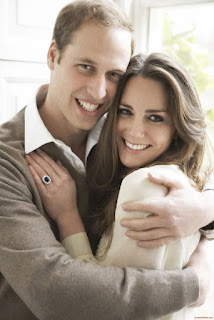
Kate Middleton will go to bed a commoner on Thursday night, without even any aristocratic pedigree or links behind her, unlike past commoners, and wake up a Princess of the Realm, at the highest level, taking precedence in rank over the rest of the Royal family except for the Queen, Prince Philip, Prince Charles, the Duchess of Cornwall and William. That's one fantastic transformation in the history of our country. Unlike Princess Diana, who could claim all kinds of connection to royalty and who was the daughter of an earl in her own right, Kate Middleton is a commoner in every sense of the word as we know it, yet with the obvious bearing, sensitivity, charm and charisma to fall naturally into the role of a royal princess. As someone as educated and articulate as her fiance, and who shared the same student world for some years, she will bring a fresh perspective to her role as a new princess.
The nation certainly approves of William's bride. But there is something different in the air about this royal wedding which is unlike any other: a mixture of anticipation, resignation and clear apathy. The country is in an economic turmoil and while, on one hand, there is a lot of joy and goodwill for the couple, and some anticipation of being part of the big day and its pageantry (a kind of welcome distraction from our troubles), the excitement of the occasion is definitely lacking, the souvenirs are not selling as much, and the resignation to the event is almost palpable to feel. For example, in my home town in Berkshire, a natural conservative base with royal leanings, there isn't a single event marking the wedding on Friday. Yet, with Charles and Diana, there were street parties everywhere to involve the nation in a spirit of communal celebration. People are definitely happy for the couple, but the happiness is muted for a variety of reasons, four in particular.

1. These are hard economic times with many businesses complaining that they can hardly find the money to pay staff for being off work for yet another public holiday, and also that the wedding will rob them of attention and patronage from clients. With the wedding holiday being added to the Easter and May 1 bank holidays, it makes the next week particularly disruptive for businesses.
2. William and Kate have been almost living together since they met, so the ceremony is really just a rubber stamp on a de-facto situation. It doesn't carry the mystery and awe of past royal weddings when brides had to be virgins and not have cavorted with anyone else!
3. The changing status of the Royal Family does not carry the loyalty, attention and support from the British public that it once did. Most of the Family is seen as irrelevant to British life in these times. Many people are likely to be complaining about the potential cost of the wedding than wanting to see the wedding, especially if they are suffering economic hardship now too.
4. While many of the public would like to see the succession skip a generation and go straight to William on the Queen's death, they know that William will have to wait quite a while after his father, so that takes some excitement out of the wedding itself.
So, altogether, the national mood does not really welcome a royal wedding and there is no noticeable dancing in the streets because of it. Instead, there is fear and insecurity in the air, which has engendered a deeper kind of resignation that the event is going to happen anyway, so we might as well all make the most of it. Furthermore, the couple are likeable in their own right, they promise something different for the country's future, and so it would be a little churlish not to wish them well for their big day.

Monday, 4 April 2011
An Open Letter to the British Coalition Government on The Concept of Equality

Dear Mr Cameron and Mr Clegg,
The 2012 Olympic Games will be hosted in London, which, no doubt will be a source of pride for the nation. The Games are a model of diversity in all its global forms. It is also very modern, especially with all the technology at the heart of its administration and the evolving rules to accommodate new and sensible changes in practice. The Games may have originated in Athens, from which the long journey of the symbolic Olympic Torch still begins, but the face of this important international event has become more inclusive, more fair and more rewarding for smaller countries to participate in. If a tiny country like Jamaica, thanks to Usain Bolt and his colleagues, could lead the rest of the world in the medals in Beijing, being placed just after the big guns, anything is possible. What might it do with the resources of those top countries? Better still, what might the UK do with a motivated and fully inclusive team in 2012? Which brings me to the point of this letter.
The concept of 'equality' (in terms of everyone being entitled to experience the SAME reality) is a social construct: idealistic and impossible. Nothing is equal in Nature in that context, and humanity is an integral part of Nature. That is why we can never eradicate social inequality because man's natural diversity, and the desire to feel significant, valued and worthy, will always prompt him to find ways to differentiate himself from others. What needs to be fully understood is that we are already made equal, but different, in our value. It is man's refusal to accept value in diversity, the natural fear of difference - and the desire to level everything down to one acceptable common denominator instead - which is preventing real social equality from becoming a reality, and nowhere is there such a contradiction than in the UK, as demonstrated by the following random examples.
1. It is a contradiction in terms to have an unelected head of the country (the Queen, with all the inherited trappings of power) and then to talk about true equality. If the monarch's presence - and an unelected House of Lords - cement a three-tiered highly unequal social system, how can equality work in the rest of society? It's like piously giving one message to one powerless section, while the powerful assiduously practises another! The stark reality of equality in Britain is a continuous message of some people being more equal than others, enshrined in the Royal Family and the nobility. This makes a nonsense of valuing people when there are clear tiers of worth. Incidentally, though London has over 36% of its population from minority communities, you would be lucky to spot anyone black around this Royal Family when they're in the UK! Mixing with anyone of colour, or employing them even, appears to be reserved for when they are abroad, yet both Buckingham Palace and St James' Palace sit right at the heart of London.
Criticism Without Solutions
2. Mr Cameron, you recently said that multiculturalism (in Britain) isn't working. This is the worst thing you could have said to your country because such negative statements do not build anything. They only destroy what is already there, and what could be possible, while giving a firm slap of disapproval to the many individuals working tirelessly to ensure social harmony and success. Quite simply, the future of the nation depends upon that harmony. Anyone can criticise current attitude, behaviour or practice, if they have a solution to change the status quo. But to make such a statement, yet not offer any solutions as to how things could be remedied, is yet another example of using fine words to appease the more powerful and privileged sections of society, while instilling fear, angst and dread in the rest of it. Your words were like dropping a grenade in the middle of a crowd, yet not expecting it to blow some heads off! If multiculturalism isn't working, where is the inclusiveness among the population? How does one change things for the better? There is no problem without a solution, so what is your solution, Mr Cameron?
Britain is already multicultural, take it or leave it. Our current social state is not a 'project' that can be started, then evaluated, then stopped if we don't like the results. We are now stuck with it, whether we like it or not. The minority population is now expanding more rapidly than the majority. We have to make the best of multiculturalism so that it benefits as many people as possible. This can be done through a simple but powerful little word: RESPECT. But at the heart of respect is SENSITIVITY, and there's the key problem.
The reason why multiculturalism isn't working (and that's a pretty sweeping statement which flies in the face of what is happening in many parts of the country) is primarily because:
* There is no national leadership around it;
* No firm guidelines on appropriate public behaviour;
* No consistency across society to instill individual confidence and reassurance:
* And no sensitivity being applied right across the board to the various communities.
Everyone appears to do what they like, and to accept anything, for fear of anyone else being upset. Thus some communities end up being treated more sensitively than others, mainly to appease in many cases, and to avoid any hassles. But wherever there is perceived injustice, there will be discontent and a feeling of exclusion, no matter who perceives it as relevant to them.
Britain is a wonderful country, as many of its multicultural citizens will testify. It is not for outsiders to impose their values on it, or for politicians to denigrate the essence of that society for political expediency. It is the duty of politicians to promote inclusiveness, purely because of the fact that, once elected, they represent every single person in their constituencies, not just the ones with the loudest voices, the right cultures or the right skin. They simply cannot choose some and reject others.

Outdated Honours System
3. While the Olympic Games march on to its inevitably modernised version, Britain is still stuck back there in an invisible empire, even though the last vestiges of that empire disappeared over 60 years ago. Minority communities are still excluded from being fully British by a pretty racist and exclusive form of accolade - the Public Honours System - which still glorifies an empire which is long gone and divides a multicultural community in the process. Worse still, the word empire means two completely different things to different sections of our society. For whites empire is about glory, power, heroism, conquest and control. For blacks and Asians, who were yoked under its highly unequal colonial system, it represents repression, discrimination, cultural imposition, lack of value, lack of identity, exclusivity and unworthiness. The real irony is that every time someone black or Asian receives such an award, they are actually being asked to celebrate and uphold the very injustices done to their forefathers! Once again, a total lack of respect for multicultural Britain.
Mr Cameron, this country can be made far more inclusive simply by replacing the word Empire in the Honours with the word 'Excellence'. That would take away that divisive term and unite the UK's multicultural population through the unified striving for excellence that would make Britain great again. At a stroke it also unites the old awards and the new ones, in that the current MBEs (Member of the British Empire), for instance, would also sit alongside the new Members for British Excellence, without them being excluded or sidelined in anyway. The initials would still be the same without removing any of the value from past awards. I have always resisted any public honour, or nominating anyone for it, because of this glorification of an invisible empire. However, I can now say, quite openly and truthfully, that I would be the first in the queue for an award - and even keen to promote it - if they became more inclusive! Prime Minister, it's the present that matters, not past glories. The past brought us to where we are, but it's the present that will decide our future. If that present is mishandled we all will reap the dire rewards.
4. There is a general mindset, both corporate and individual, that fears difference of any kind. A mindset that refuses to accept the validity of diversity and its strength in preference to an artificial levelling concept of equality that is meaningless, irrelevant and patronising to those it applies. For example, anything applying to white males appear to be the norm. No one questions their suitability in the corporate world for any position. However, mention anyone else in the frame, especially women and minorities, and immediately terms like 'merit', 'best person' for the job and 'not lowering the standards' are pronounced with gay abandon. Ipso facto, only men 'merit' anything automatically in the workplace, only they are the best ones for the post and only they will uphold the standards of recruitment! Anyone deviating from them has to be questioned and kept out to keep the status quo in place. Yet the number of men who currently gain their positions because of whom they know, and their gender, rather than what they know, is simply legion!
The Limitations of Laws
What we have in the process of our evolving society is rapidly expanding technology having to contend with old mindsets around age, difference and diversity; fearful mindsets that are trying vainly to cope with current needs and failing dismally. The most important point relating to such mindsets is this: Laws do not give equality. Laws merely provide a framework for its process and a source of information for its compliance. Laws do not make people equal because they are equal already in their own right. The only thing that gives true equality is an acknowledgement and acceptance of difference: respect to that difference without trying to level it to suit the most powerful sector, and sensitivity to all parties involved, not just one group against the others.
We need a new mindset that says anyone merits whatever they are given, until proven otherwise. A mindset that readily accepts diversity, seeks to learn from it and to celebrate it - a diversity that is fully inclusive of whites as well as blacks, men as well as women, and old as well as young, to name a few.
Those four examples dealt with equality on a general public level, but what of the inequality on a personal level?

5. Let's use that honours system again, where the honours are awarded to gays like Sir Elton John. He is a knight of the realm, and he is married with a partner. Naturally, David Furnish cannot be called Lady John, as would have happened with a heterosexual couple. But why hasn't there been an equivalent so that Sir Elton's family, and others like him, do not lose out on enjoying their achievement? What about The Right Honourable, for partners like David, or a brand new title that addresses the needs of gays in this respect (that sensitivity again), instead of just paying lip service to their legal marriage without the rights that are naturally accorded to their straight counterparts. It's sensitive, personal INCLUSIVE elements like that which make people feel valued and equal, not contrived situations which deny their inclusion and have little relevance for them. An individual feels equal not when a law says so, but when his/her life has relevance, meaning and significance to him/her AND to others. The army of virtually invisible minorities in Britain are a long way from feeling any relevance or significance in their lives, despite their ongoing contribution to the country and their loyalty to it. Mr Cameron and Mr Clegg, if you want to know how invisible minorities are in Britain, have a look in Westminster Abbey on April 29th. You really won't be disappointed.
With the orgy of cuts going on at the moment, it is easy to believe that as long as everyone is treated equally, i:e the same, then the cuts are justified and the most vulnerable won't suffer. Except that cutting 10% of £1000, in a household where that income is barely enough (the worst paid people in Britain already being Bangladeshis and Pakistanis), is not the same as 10% of £50,000, where that family is already well off! Equality does NOT come through sameness, applying everything right across the board in one great majestic sweep of fine intentions. Equality comes through appreciating and accepting the diversity of our world, and valuing people as they are, with due sensitivity to their needs and what matters to them - and in a spirit of compromise. Not just imposing upon them what we think is right in order to make them fit our vision of the perfect world.
Again, equality is not trying to make others into what we wish them to be by ignoring their difference. True equality comes by enabling diverse peoples, through their own perspectives, to see their value, their worth and what is truly possible, by working together with others in a spirit of mutual respect for the common good.

I have twinned the Olympic Games with the concept of equality and multiculturalism because when the UK was bidding for the Games, it shamelessly cavorted its multicultural community to impress the international Olympic Committee. There was no talk of multiculturalism failing at that time! In fact the cynical message to the rest of the world was how well it was working in Britain which made it the best place for the Games!
The diverse Olympic Games will be staged in our capital in 2012. But how truly diverse will Britain be when it welcomes the members from all those countries? How fair and sensitive will it be to its own people? Will it still be stuck back in its unchanging white empire as politicians welcome the diversity of the Games while hypocritically trumpeting the failure of multiculturalism to score cheap points?
Or will it simply be unequal business as usual after the grand PR displays have faded, the torrent of empty words become an echo, and the victorious but tired competitors have gone home?
Sincerely,
Elaine Sihera (Ms CYPRAH)
Author: Managing the Diversity Maze
Friday, 1 April 2011
Breaking News!!...Royal Wedding: Kate Middleton to wear revamped Diana wedding-dress!

The news has been leaked from Buckingham Palace that Kate Middleton, the fiancee of Prince William, and soon to be his bride on April 29, will not only be wearing the engagement ring of the late Princess Diana, but will also be wearing the back-up dress that the Princess herself made for her wedding exactly 30 years ago.
Princess Diana was so concerned that her wedding dress should remain a secret, the designers, Emmanuel, had to make TWO dresses to throw nosy media off the scent. She wore the main dress up the altar to stunning effect in 1981, but the second dress was never required. That's the one Kate Middleton will be wearing, particularly because of the recession, apparently to avoid unnecessary expenses relating to the event. The wedding dress is usually one of the most expensive items of the occasion, so wearing a dress which is already made and waiting to hand would cut thousands of pounds off the final bill, and won't make the bash appear too extravagant.

According to an anonymous spokesperson at the Palace, "Miss Middleton suggested it herself as a mark of respect to the public in these economically trying times, and it was avidly agreed to by the Prince, especially as it was made for his mother."
As that dress has never been seen, and is apparently being 'modernised' to match Miss Middleton's taste, it will be guaranteed anonymity until it is worn. The public are waiting with bated breath to see it.
When asked his opinion, David Cameron, the British Prime Minister, thought it was an 'excellent idea'. He said the Coalition government was very proud of the bride-to-be, who is already displaying the empathy and common sense "so essential of a future queen".
He went on to add that, "Only fools in April would not agree with such a wise decision!"
Friday, 8 October 2010
Why Swingeing Cuts And a Big Society do NOT go Together

Britain's Prime Minister, David Cameron, delivered a rousing speech to Conservative party faithfuls at their annual conference when he called them to arms with 'Your country needs you', and emphasised the Big Society where everyone looks out for one another on a voluntary, cooperative and empathetic basis. All fine words indicating fine ideals and a desire to unite the nation in a time of impending austerity and sacrifice, but they are highly inappropriate to the current situation.
It means that Mr Cameron's vision will remain just that for some time because of common human factors that he and his team have not really taken into account. And the most hidden and destructive factor is FEAR. David Cameron would be better off appealing to people as individuals with whom he shares their concern and anxieties, while he is threatening to relieve them of their basic livelihoods in the dreaded cuts, rather than trying to force them to look outward at a time when that is not emotionally possible. When we are threatened, individually, it is a natural instinct to retreat and defend, not join with others, simply because everyone else becomes a potential scapegoat.
In any kind of economic or social upheaval, fear is the dominant factor, which is entirely understandable. If a family is worrying about losing their jobs, not getting enough benefits which are going to be slashed, about the economy being in recession and depriving them of opportunities, the last thing they will care about or wish to know about is someone else's problems. The reason why a Big Caring Society might work during war time but won't in economic downturns is because the two situations are vastly different.
Fighting a common enemy
War is caused by external forces, enemies of the state, who present a threat to every person within that society. It stands to reason that their very survival is at risk which will require each person to join forces to repel the enemy who could indiscriminately destroy them. No one is excluded. When there are economic problems, people do not care about the big picture because the concern moves from the macro (national) to the micro (the home) where the main priority is each family for itself. Instead of joining forces, people will be more concerned with who is getting more than they are, who is to blame for such problems and who should accept responsibility for their precarious situation. There will be no unity of approach or action under such conditions. Protecting one's position from erosion and further attack assumes priority while reason and common sense take a back seat because of that fear.
Economic downturns always carry blame and a need for scapegoats because jobs are not just things we do for money. They are also the essence of how we perceive ourselves in status, rank, responsibilities, sense of achievement, self-worth and identity. Any threat to all that is not conducive to unity and cooperation because people who are riddled with anxiety, with doubt and low confidence, will be ruled by fear of the future, and fear is a limiting emotion, not a constructive one.
Couple that fear with the stark fact that the government expects people to volunteer their time free of charge, that there will be no real money to motivate action, and one can kiss the Big Society goodbye! How are people worried about day to day issues supposed to bear the expenses themselves of doing the government's job for it? That's like pouring salt into an already open wound! For example, I am semi-retired and have volunteered in the past for whatever took my fancy, especially in empowering others. But I would think twice before helping with anything that would leave me anxious and out of pocket - worse off than I am. That would be rather foolish, especially if my income is steady and unchanging. Who makes up the shortfall?
Basic questions like that will be the kind asked by most families in Britain today. They will not be about anyone else because in times of economic crisis, thoughts are likely to turn to scrutiny of the role of the better-off in society, the unequal gaps between communities and ultimately to the government. Playing one big happy family in a Big Society would be the last thing on their minds while they are fretting and cogitating about their fate.
I think Mr Cameron needs to go back to the drawing board for this one, or simply leave it until there are clear signs of recovery. Perhaps then the idea of joining hands together in celebration of renewed good fortune might actually lead to the Big Society he so desperately seeks. It really is a question of timing than anything else in getting what we desire and the Big Society is an idea whose time has, clearly, not yet come.
Monday, 9 August 2010
Is there really such a thing as 'The Truth'?

Some years ago, I noted in my book, Managing the Diversity Maze, that: "’Truth’ is governed by privilege. It always looks so right when one has the power to support it". Thus ‘the truth’ of “Black people, women and others who suffer under such inequalities will seldom share anything with the ‘truth’ of the exploiters because they are both coming at that singular ‘truth’ from two different positions of privilege: one group has it and the other has not. That is what keeps equality from ever becoming a reality and cements its unequal foundations, regardless of the superficial flurry of activity and proliferation of fine words to prove otherwise.”
One man gave a stark demonstration of that comment at the time: Rudy Giuliani, the one time Mayor of New York and recent presidential hopeful. Rudy went from sinner to virtual saint with the 9/11 tragedy. In 2002, Rudy was riding high. He was dubbed the Mayor of the World by the New York Times magazine which made him its Person of the Year. And, in my opinion, if anyone truly deserved such an accolade, it was the Mayor of New York. He could not have been more of a father to his citizens when they needed him most, nor could he have been more caring and compassionate to shocked New Yorkers blasted by the carnage. Yet Rudy is living proof of the power of perception regarding the transient and questionable nature of 'truth'.
As I watched him tirelessly leading the city throughout September and beyond, I was extremely inspired by his unselfishness, humility, obvious compassion and quiet approachability. The cold-hearted mayor I had heard about up to a few months before seemed many miles away, bearing little relation to the man who now commanded so much respect and genuine authority, representing two completely different versions of ‘the truth’ according to one’s perception, expectation and frame of reference.
In fact, many other Black people in New York would have had some trouble adjusting their lens to double check that this new saintly figure was the same mayor who presided over three particularly brutal incidents and even backed his policemen in doing two of them too.
Zero Tolerance of Crime
According to the Times magazine, in 1997 Abner Louima, a Haitian man, was sodomised with a mop handle by policemen in a Brooklyn-precinct bathroom. Two years later, an unarmed street pedlar named Amadou Diallo was killed when police in the Bronx fired 41 shots at him in a dark lobby. In 2000, barely 18 months before 9/11, “an unarmed security guard named Patrick Dorismond, who had been trying to hail a cab outside a midtown bar, was shot to death after a scuffle with undercover cops”. “Giuliani denounced the policemen who brutalised Louima but defiantly backed the ones who killed Diallo and Dorismond.” In their cases the juries actually cleared the policemen of wrong doing. Giuliani had declared zero tolerance on crime and would not let a little matter of skin colour block his objective, which gave a licence to others to rob African Americans of their rights and even their lives.
Because of his obstinate and his seemingly cold-hearted stance against the unarmed victims, the man who was to “save New York city” saw his popularity ratings plummet to new lows. But therein lies the capacity of power to change perception of what constitutes ‘the truth’.
With the support of the majority White community behind the law enforcers, crime assumed a particular colour. Giuliani had to show how a tough mayor should act towards those who were perceived to be the most troublesome, especially if they were easily identifiable. According to the magazine, “New York City was getting better, but the mayor seemed to be getting worse”. It was easy for him to feel unassailable. Inflated by his own idea of ‘the truth’, he seemed uncaring as to the consequences of it.
In mitigation, he told the reporter, “People didn’t elect me to be a conciliator. If they just wanted a nice guy they would have stayed with Dinkins” (the former mayor). “They wanted someone who was going to change this place. How do you expect me to change if I don’t fight with somebody?” he asked. “You don’t change ingrained human behaviour without confrontation, turmoil and anger.”
And this statement of his truth is absolutely right. Except, if it came from a Black male, it would have been regarded as somewhat dangerous; disturbing enough to merit the attentions of the security forces who would have questioned his intent and been wary of his actions. But he is White, which carries its own might, and that’s all right. He has both the colour and the power to give credibility and life to his version of ‘the truth’. A Black male talking about ‘confrontation and anger’ had better watch his back! There would be no ’truth’ in that.

Confrontation and challenge
But, I am one of those who agreed with that simple statement because it really was ‘the truth’. From the day I took on this thankless task of changing hearts and minds, I have felt that unmoving attitudes cannot be changed with just fine words and flowers. One has to be armed with something stronger: like 'confrontation, turmoil and anger'.
Change always starts with confrontation and challenge: confronting the self to change personal perceptions; confronting others as well as the issues no one wishes to acknowledge, or which everyone pretends do not matter. To confront and challenge basic injustice and discrimination in order to get at this elusive 'truth'.
Once there is confrontation there is turmoil. Any form of negative challenge disturbs the status quo and unleashes the worst anxieties within us. Anger swiftly follows, both from resentment at being challenged and from frustration on the part of the challenger at the lack of change or the slowness of it. However, once confrontation begins, it is like a pandora’s box which either generates argument and debate or unleashes a riot of indignant emotions and actions.
In the light of my book, Managing the Diversity Maze, Rudy Giuliani’s simple statement answered a lot of questions about my own ‘truths’ and objectives. This book certainly confronts the issues head on, starting from the Establishment to the individual, and a good deal of turmoil has followed in the ensuing reality check. But then, I have never shirked from the task! People who benefit from the status quo will seldom ever change unless it continues to reward them in some significant way.
I admire Rudy Giuliani a great deal now because some time in 2000 he had the humility to question his version of 'the truth’ regarding one section of the community and also the courage to face up to the negativity of the fact. With the two brutal murders fresh in his mind, he pledged his remaining time in office to “breaking down some of the barriers” he felt he had placed between himself and visible minority communities. “I don’t know exactly how you do that,” he said, “but I am going to try very hard.” He did succeed in some measure and reached his zenith with 9/11 because he began to confront his version of ‘the truth’, not a comfortable thing to do, but a necessary one in dealing with difference. In these awful tragic moments, the meaning of life assumes a clarity over questionable 'truths' which is almost blinding.
Next time one is hell bent on seeking 'the truth' as one sees it, one needs to remind one's self that personal perceptions and personal power dictate individual truths. That the nearest thing to a universal 'truth' happens only when majority perceptions merge in agreement on the same versions of 'the truth'. But even then, one has to be careful to ensure that this 'truth' is not being ruled by vested interest, is not being stifled by unbending traditions, is not holding commonsense to ransom, is not being used to bolster injustice and is not being held hostage to the latest fad for some select group.
In other words, in our search for the truth, we will always meet some road blocks or false versions of it. The test is to tease out which truth we are prepared to hang on to and defend, in the face of the consequences for ourselves and others.
Friday, 6 August 2010
Is Saying 'Black Power' a Racist Statement?
Q. "Recently, in New York City, a transit worker put a 'Black Power' sign up in his booth at the train station. He was asked to take it down by a White man. When he refused the man took a picture of it and then called the media which jumped on it. I have very mixed feelings about this but I want to hear what you think first. Do you think posting a 'Black Power' sign on Martin Luther King Day denotes racism? I can't speak for anywhere else but the phrase 'Black Power' in New York was developed by us for us. It had nothing to do with putting White people or anyone else down."
A. The key question here is: Would you feel happy and comfortable with someone who suddenly puts up a poster saying 'White Power'? If you wouldn't, then it is about mutual respect. Empowering phrases like 'Black Power' served a purpose IN THEIR OWN TIME. The problem with many Black people who might feel impotent about their life and progress is that they are not moving on in life, not evolving from one time or experience to another. They feel they have little to be joyful about so they still use tired old slogans, which exclude others; still live in the past and are seeking scapegoats for their situation, when times have moved on. They put emphasis on words, when something more tangible is needed to improve their life and perspective. We need to be more inclusive of others now, to stop the blame and take responsibility for ourselves. That's the only way to self-empowerment and true power. As to the sign being put up on Martin Luther King Day, it does the great man a disservice. Dr King did not preach division, or simply extolling ourselves. Far from it, he taught unity and co-existing together. Genuine equality, that was his dream. Not one person above another.
We cannot be demanding respect if we give none. We cannot want to be treated fairly if we are still being exclusive of others and unfair to them purely because of their colour. At the heart of respect is sensitivity. If we have none towards the feelings of others, how can we genuinely expect our sensitivities to be respected and appreciated? We do not gain self-esteem and power by putting others down, otherwise we too are dragged down by it. That phrase might have suited the past when we wished to make a point to racists and to encourage our self-belief in some awful situations. But it is quite inappropriate now, especially if we have White friends and colleagues and want to build bridges.
You are right that 'Black Power' emerged initially, from a sea of racism, as a great motivator to remind us of our talent and potential, but it is increasingly being used as a kind of superior one-upmanship against White peers. My question is, why do we STILL need to keep saying it? Aren't we convinced yet of our own power and worth? Power is subtle and pervasive. If we have to point it out, we haven't got it! Do we feel so inferior to others that we have to keep reminding ourself how 'powerful' we are, when no other culture behaves in that way? They simply get on with it and prove their worth in their creativity, innovation and their wealth. Meanwhile, we merely keep shouting words, yet living double standards in our behaviour. We are still calling each other 'niggas', our women 'hoes' and 'bitches, still using violence against one another at every turn, still being a nation of single mothers while our children are deprived of balanced parentage, and too many of our men are incarcerated in prison instead of educating themselves to take advantage of their revolutionary world and its opportunities.
Is that all the 'power' we can actually muster as a community?
Engaging in Positive Action
We develop esteem and genuine power through SELF-LOVE, high personal standards and kindness and compassion towards others. When we no longer feel the need to shout 'Black Power', to feel superior or treat others in a mean way to uplift ourself, we will be truly powerful. No one will have to tell us then. That's when we would have matured and evolved because we would have finally laid down the past and freed ourselves from its limiting and caustic effects.
We need to stop talking and start doing. Start engaging one another in positive action, in love instead of hate, because words are pointless without the actions to match. Then I might begin to believe that, collectively, we truly have 'Black Power'. We will not only be saying it then, but the quality of our life, the achievements within it, and the love we give out will be ample evidence of it. Oprah Winfrey has "Black Power" and it is not only about her money. Her influence is pervasive across American life - the universal reference point for making things happen. She makes people's careers just by engaging them. I regard myself as a very powerful Black woman too because I love who I am, I have no wish to be anyone else and am neither above nor beneath anyone. Being successful in my own small way, there is no place for blame in my vocabulary, only love. I sincerely believe I can make a difference to the lives of others, every single day, even with a simple smile. I don't need to shout about having 'Black Power'. I just prefer to demonstrate it in my actions. When you believe it, it becomes a natural part of your life. There is nothing further to prove, except to utilise the opportunities, the rewards and the enormous potential available.
In answer to your question, in my opinion, 'Black Power', would be deemed as racist now because it implies superiority over other colours and cultures. Regardless of its value to Black people, if a White person pointedly said similar in our presence, we would be offended. That does not improve understanding and tolerance or bring us any closer together. The last words go to Dr. King:
"Hatred paralyzes life; love releases it. Hatred confuses life; love harmonizes it. Hatred darkens life; love illuminates it....Love is the only force capable of transforming an enemy into a friend."
A. The key question here is: Would you feel happy and comfortable with someone who suddenly puts up a poster saying 'White Power'? If you wouldn't, then it is about mutual respect. Empowering phrases like 'Black Power' served a purpose IN THEIR OWN TIME. The problem with many Black people who might feel impotent about their life and progress is that they are not moving on in life, not evolving from one time or experience to another. They feel they have little to be joyful about so they still use tired old slogans, which exclude others; still live in the past and are seeking scapegoats for their situation, when times have moved on. They put emphasis on words, when something more tangible is needed to improve their life and perspective. We need to be more inclusive of others now, to stop the blame and take responsibility for ourselves. That's the only way to self-empowerment and true power. As to the sign being put up on Martin Luther King Day, it does the great man a disservice. Dr King did not preach division, or simply extolling ourselves. Far from it, he taught unity and co-existing together. Genuine equality, that was his dream. Not one person above another.
We cannot be demanding respect if we give none. We cannot want to be treated fairly if we are still being exclusive of others and unfair to them purely because of their colour. At the heart of respect is sensitivity. If we have none towards the feelings of others, how can we genuinely expect our sensitivities to be respected and appreciated? We do not gain self-esteem and power by putting others down, otherwise we too are dragged down by it. That phrase might have suited the past when we wished to make a point to racists and to encourage our self-belief in some awful situations. But it is quite inappropriate now, especially if we have White friends and colleagues and want to build bridges.
You are right that 'Black Power' emerged initially, from a sea of racism, as a great motivator to remind us of our talent and potential, but it is increasingly being used as a kind of superior one-upmanship against White peers. My question is, why do we STILL need to keep saying it? Aren't we convinced yet of our own power and worth? Power is subtle and pervasive. If we have to point it out, we haven't got it! Do we feel so inferior to others that we have to keep reminding ourself how 'powerful' we are, when no other culture behaves in that way? They simply get on with it and prove their worth in their creativity, innovation and their wealth. Meanwhile, we merely keep shouting words, yet living double standards in our behaviour. We are still calling each other 'niggas', our women 'hoes' and 'bitches, still using violence against one another at every turn, still being a nation of single mothers while our children are deprived of balanced parentage, and too many of our men are incarcerated in prison instead of educating themselves to take advantage of their revolutionary world and its opportunities.
Is that all the 'power' we can actually muster as a community?
Engaging in Positive Action
We develop esteem and genuine power through SELF-LOVE, high personal standards and kindness and compassion towards others. When we no longer feel the need to shout 'Black Power', to feel superior or treat others in a mean way to uplift ourself, we will be truly powerful. No one will have to tell us then. That's when we would have matured and evolved because we would have finally laid down the past and freed ourselves from its limiting and caustic effects.
We need to stop talking and start doing. Start engaging one another in positive action, in love instead of hate, because words are pointless without the actions to match. Then I might begin to believe that, collectively, we truly have 'Black Power'. We will not only be saying it then, but the quality of our life, the achievements within it, and the love we give out will be ample evidence of it. Oprah Winfrey has "Black Power" and it is not only about her money. Her influence is pervasive across American life - the universal reference point for making things happen. She makes people's careers just by engaging them. I regard myself as a very powerful Black woman too because I love who I am, I have no wish to be anyone else and am neither above nor beneath anyone. Being successful in my own small way, there is no place for blame in my vocabulary, only love. I sincerely believe I can make a difference to the lives of others, every single day, even with a simple smile. I don't need to shout about having 'Black Power'. I just prefer to demonstrate it in my actions. When you believe it, it becomes a natural part of your life. There is nothing further to prove, except to utilise the opportunities, the rewards and the enormous potential available.
In answer to your question, in my opinion, 'Black Power', would be deemed as racist now because it implies superiority over other colours and cultures. Regardless of its value to Black people, if a White person pointedly said similar in our presence, we would be offended. That does not improve understanding and tolerance or bring us any closer together. The last words go to Dr. King:
"Hatred paralyzes life; love releases it. Hatred confuses life; love harmonizes it. Hatred darkens life; love illuminates it....Love is the only force capable of transforming an enemy into a friend."
Subscribe to:
Posts (Atom)
